The Most Common Electrical Problems in UK Homes (And What Causes Them)
Most electrical problems don’t appear overnight. They usually start small, a flicker here, a trip there, before turning into something more serious.
If you live in an older property in Dorset, Wiltshire or Hampshire, or your electrics haven’t been checked in a while, it’s worth knowing what to look out for.
Here are the most common electrical issues we see in UK homes, and what typically causes them.
1. Frequent Tripping at the Consumer Unit
If your consumer unit (fuse board) trips regularly, it’s trying to protect you.
Common causes include:
- Overloaded circuits
- Faulty appliances
- Earth faults
- Damaged wiring
- An outdated consumer unit
Resetting it once is fine. Resetting it repeatedly without investigating the cause isn’t.
2. Flickering or Dimming Lights
Flickering lights can be something simple like a loose bulb, but they can also indicate:
- Loose wiring connections
- Voltage fluctuations
- Overloaded circuits
- Failing light fittings
If multiple lights flicker across the property, it’s worth getting it checked properly.
3. Dead Sockets
If a socket suddenly stops working, possible causes include:
- A tripped breaker
- Loose wiring behind the faceplate
- A failed socket outlet
- Circuit faults
Never remove a socket faceplate unless you know what you’re doing, exposed wiring can be dangerous.
4. Burning Smells or Discolouration
This is one you should never ignore.
If you notice:
- A burning smell
- Brown or black marks around sockets
- Warm plug sockets
- Buzzing noises
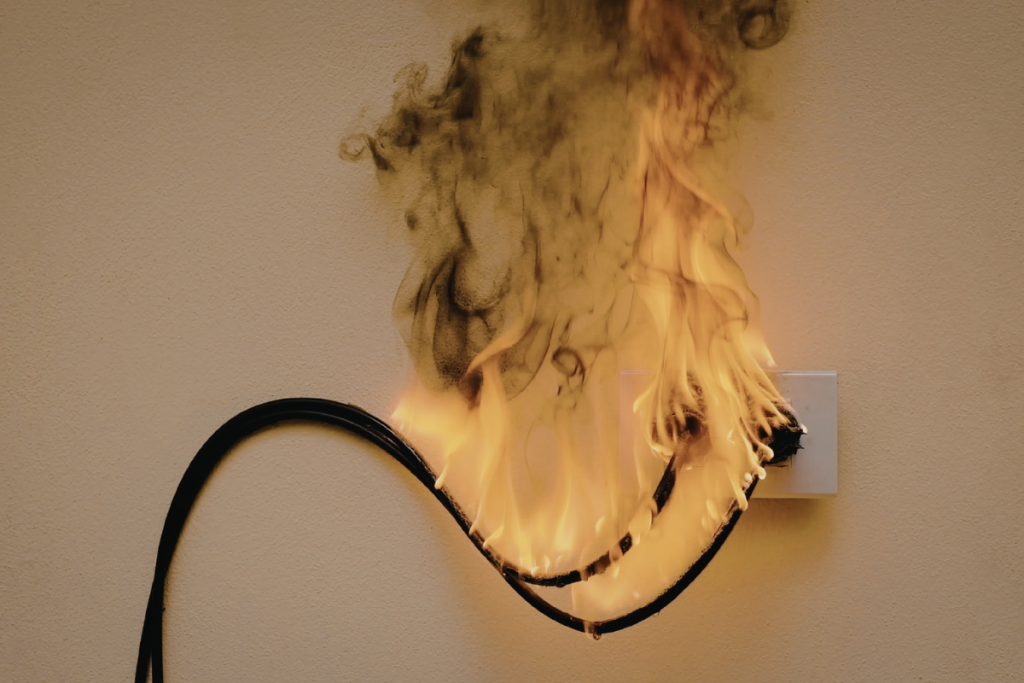
Turn off the power to that circuit and call an electrician immediately. Overheating connections are a common cause of electrical fires.
5. Bulbs Blowing Frequently
If lightbulbs keep blowing in the same fitting, it may not be the bulb.
Potential causes include:
- Loose connections
- Incorrect voltage
- Poor quality fittings
- Wiring issues
Repeated bulb failure often points to an underlying electrical problem.
6. Old Fuse Boards
If your property still has an old rewireable fuse board, it may not provide the level of protection modern homes require.
Modern consumer units include RCD or RCBO protection, which helps reduce the risk of electric shock and fire.
Upgrading isn’t just about convenience, it’s about safety.
7. Outdated Wiring
Many UK homes built before the 1980s may still contain older wiring.
Signs include:
- Fabric or rubber-insulated cables
- No RCD protection
- Insufficient earthing
- Lack of sockets leading to heavy extension lead use
Older wiring doesn’t automatically mean unsafe, but it should be assessed periodically.
When Should You Call an Electrician?
You should always seek professional advice if:
- Circuits trip regularly
- You notice burning smells
- You see exposed wiring
- You’ve recently moved into an older property
- You’re planning major upgrades (kitchens, extensions, EV chargers)
Electrical faults are one of the leading causes of house fires in the UK, and many are preventable with proper inspection and maintenance.
Keeping Your Home Safe
Regular inspections, sensible upgrades and early fault diagnosis can prevent bigger (and more expensive) problems later.
If you’re experiencing electrical issues or would like a safety check, Forest Edge Electrical provides fault finding, consumer unit upgrades and Electrical Installation Condition Reports across Dorset, Wiltshire and Hampshire.
If something doesn’t feel right, it’s always better to get it checked.